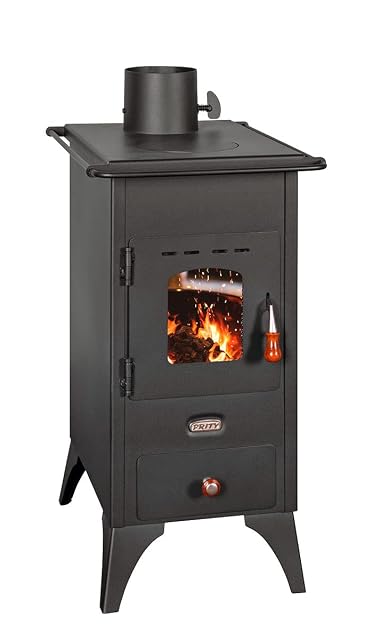
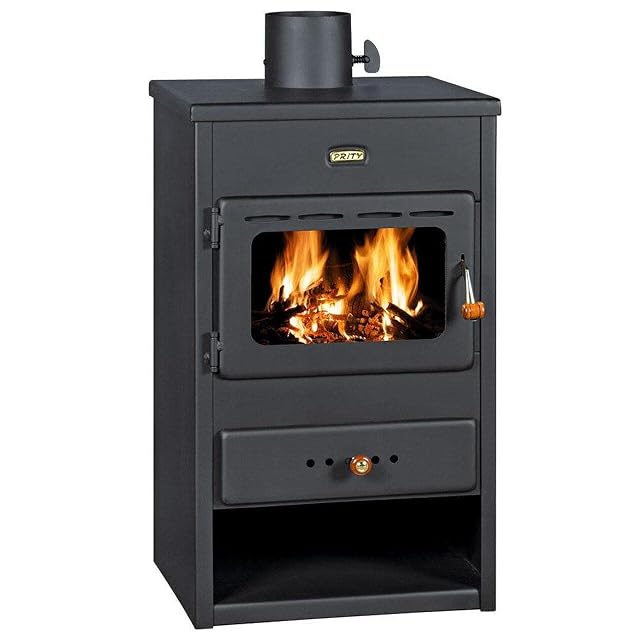
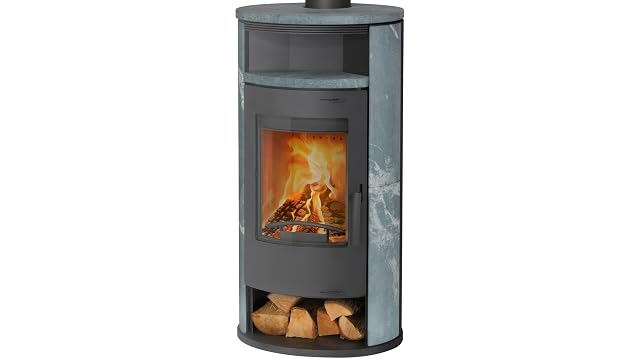
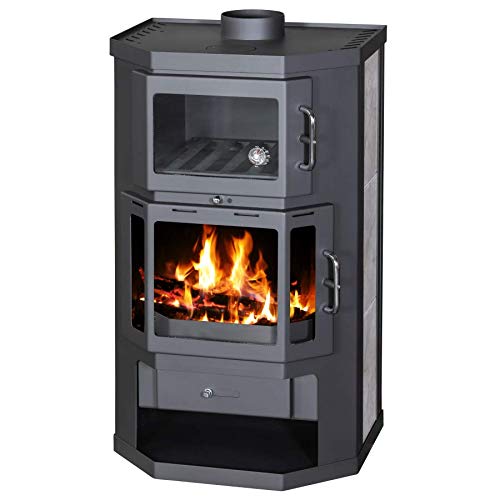
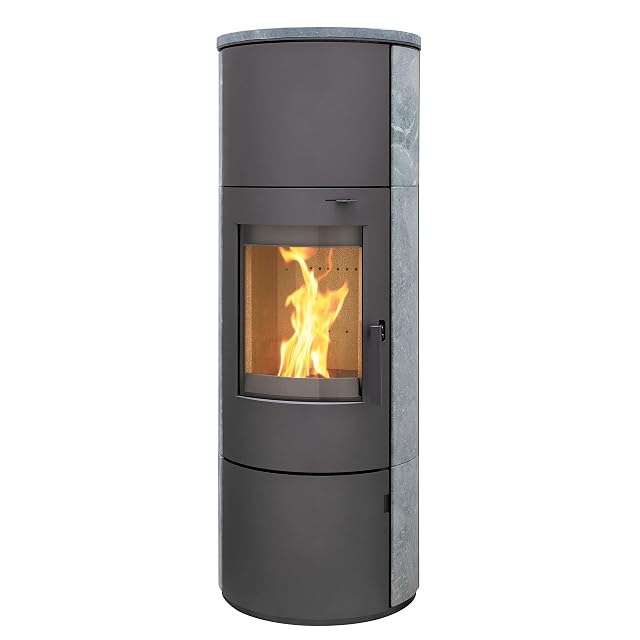
Four published figures, and a fifth that decides whether it may be fitted
The best wood stoves for 2026
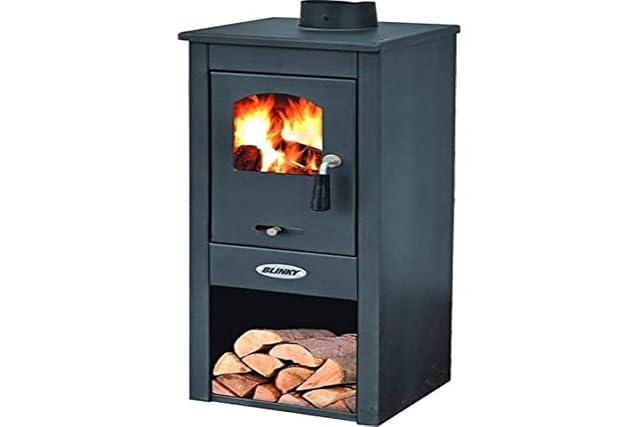
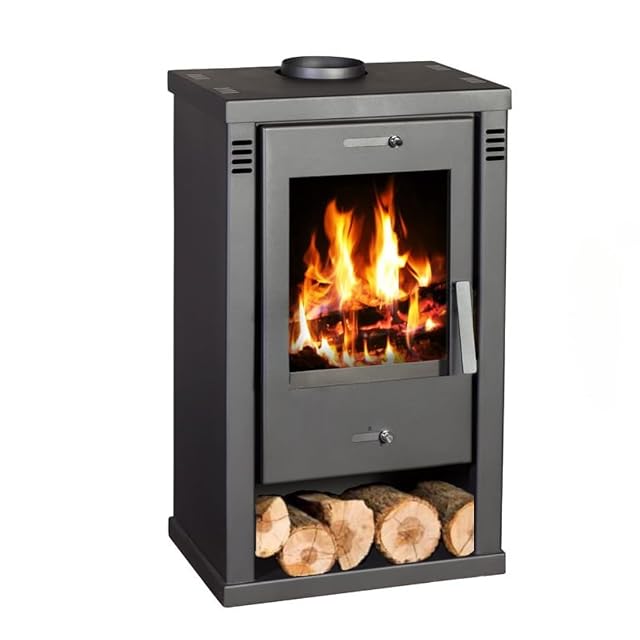
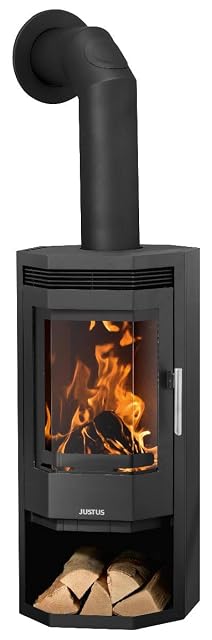
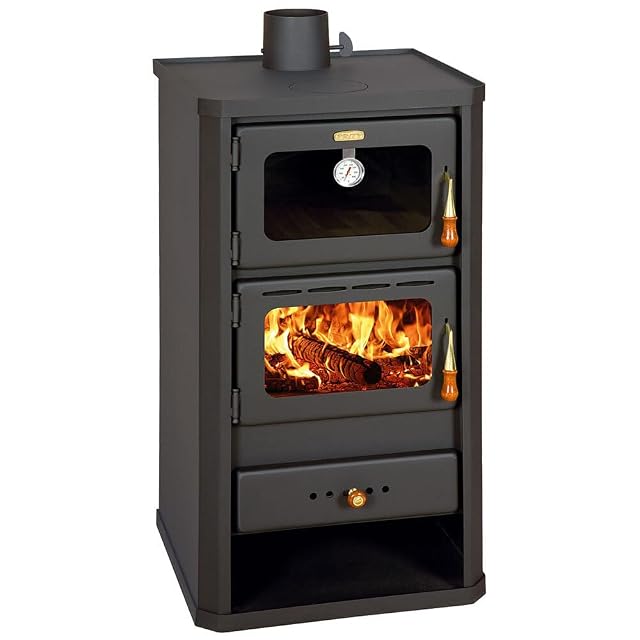
A wood stove is a firebox, a flue spigot and a door, and almost every listing publishes the same four numbers about it: the rated output in kilowatts, the efficiency as a percentage, the heatable volume in cubic metres, and the flue diameter in millimetres. Three of those are comparable between makers. The fourth one — heatable volume — is not, and it is the figure buyers lean on hardest. It is derived from the rated output against an assumed building standard, and each maker assumes a different one: two 6 kW stoves in this shelf state 120 m³ and 180 m³ respectively, and the difference is an assumption about insulation rather than a difference in the stoves. The number that actually constrains a room is the rated output, and the rule of thumb the trade uses — roughly 1 kW per 10 m² in a reasonably insulated room — puts most of these stoves in the same bracket. Then the flue spigot: its diameter and whether it leaves the stove at the top or the back decides what pipe will connect it, and a rear spigot on a stove that must stand in a corner is a fitting problem no specification sheet describes. Finally the approval: the European standard for roomheaters and, in Germany, the emission stage the appliance meets — the thing that decides whether a stove may legally be connected at all. We compare nominal output, efficiency, required draught, flue spigot diameter, flue gas temperature, emissions, standard named, energy label, construction, dimensions and weight.