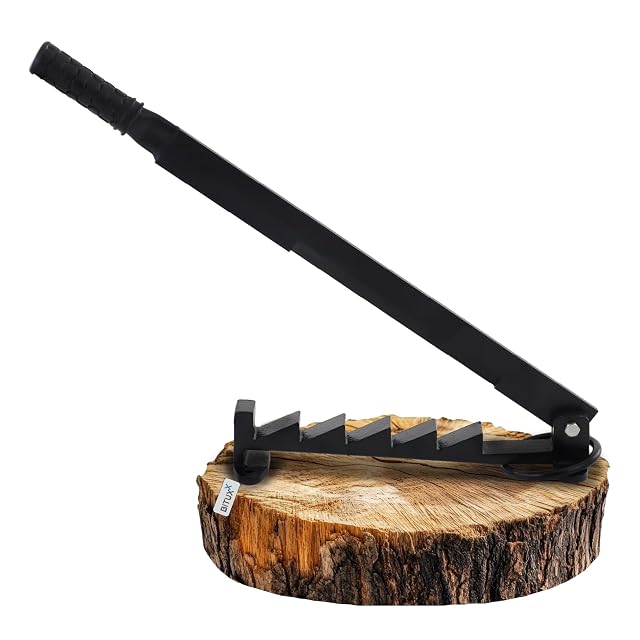
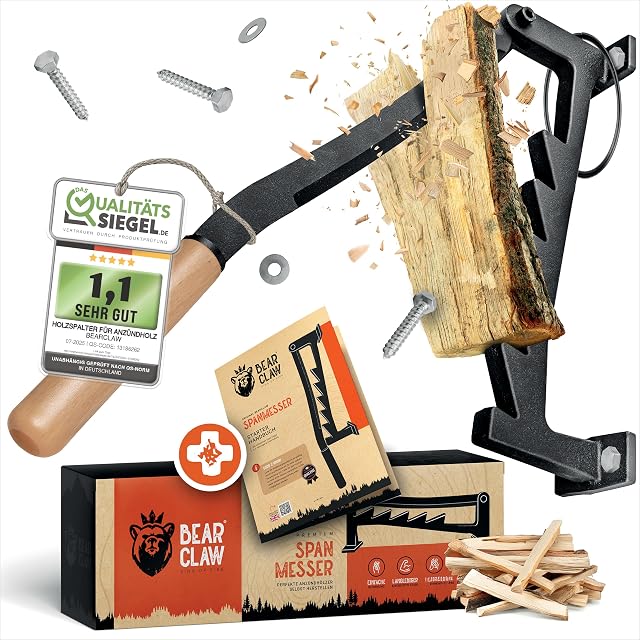
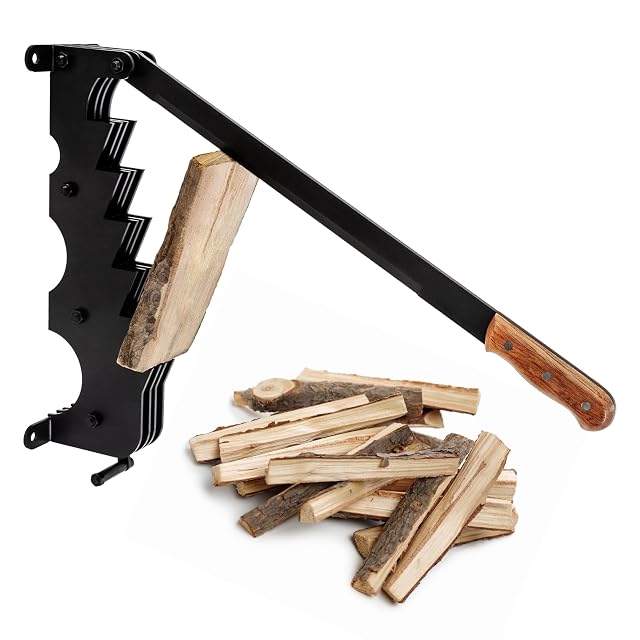
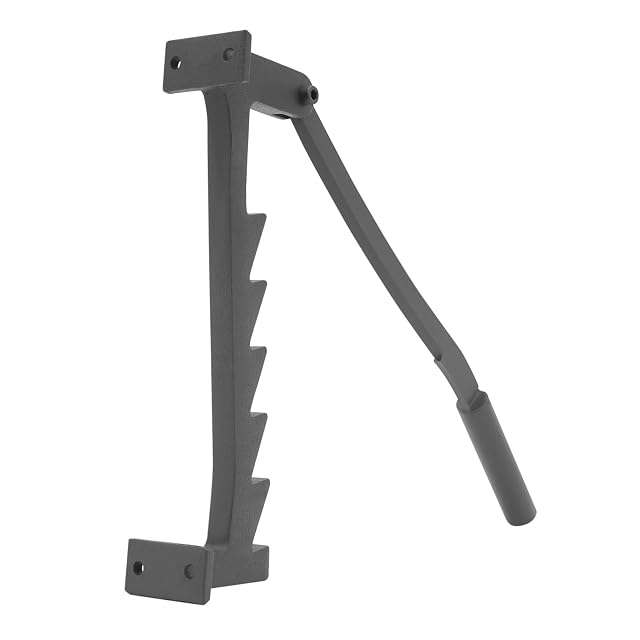
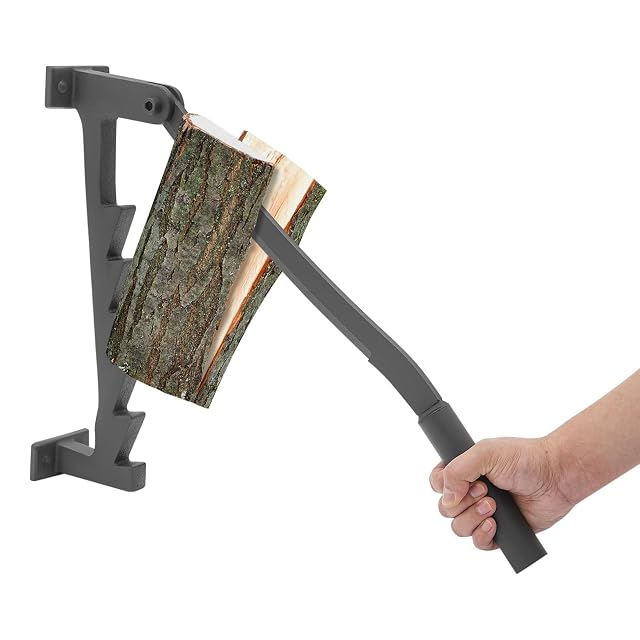
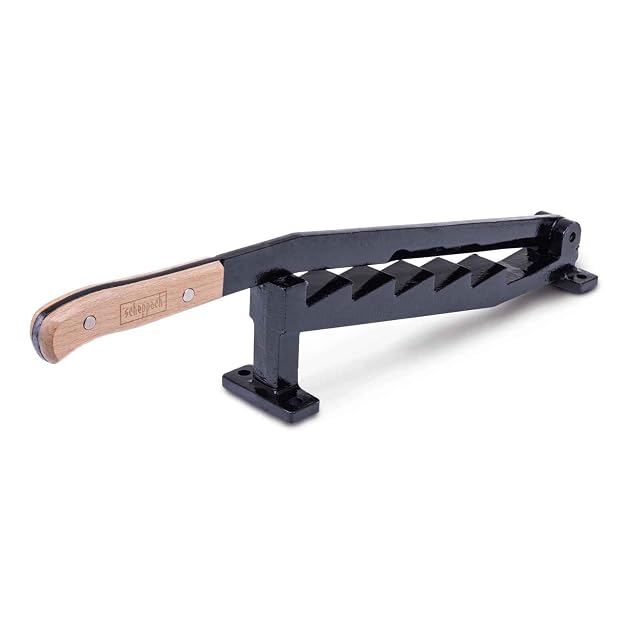
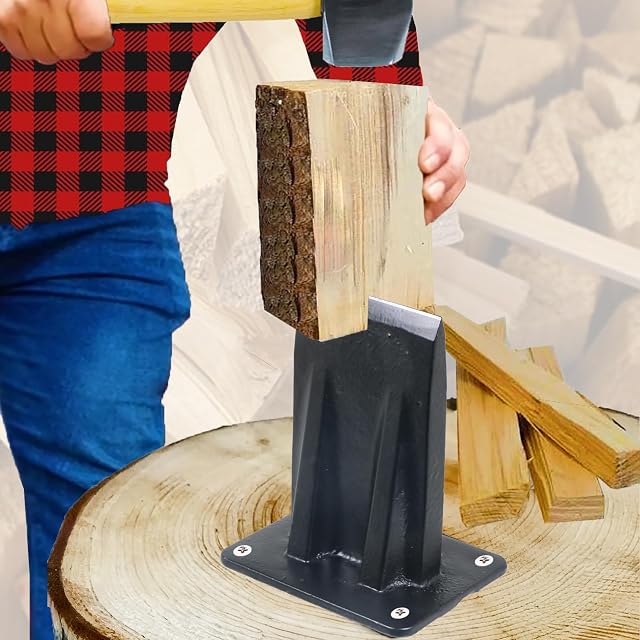
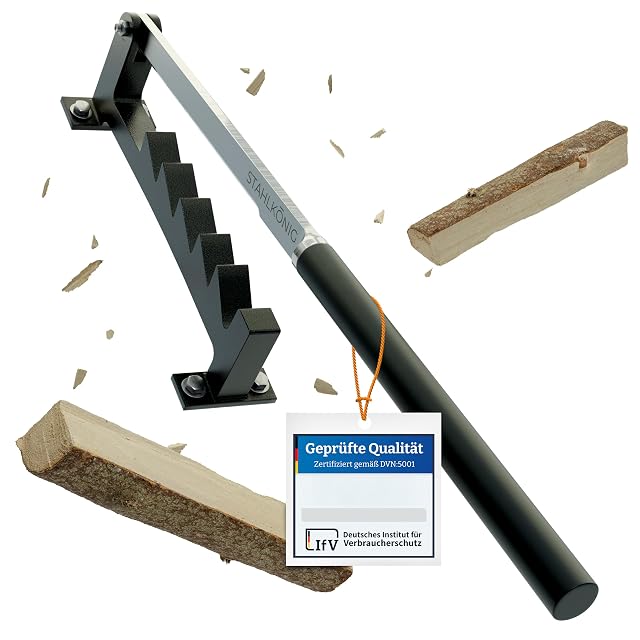
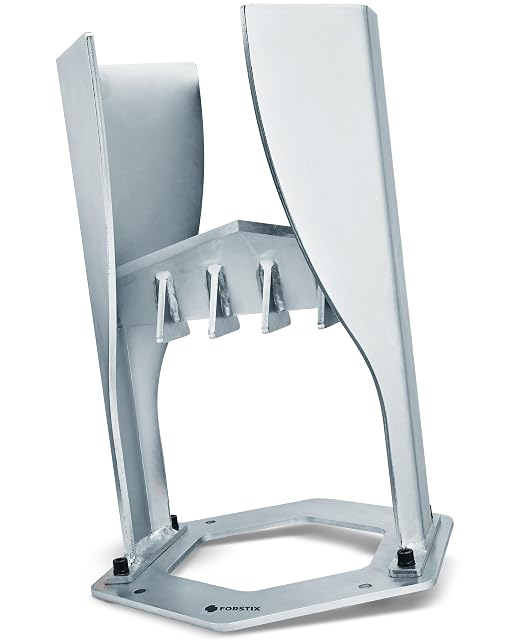
No motor, no blade in motion — a wedge you drive wood onto
The best kindling splitters for 2026
A kindling splitter is a fixed blade in a ring or a frame: the wood is placed on the edge and struck, or pressed down by a lever, so the hand that holds the log is never near a moving blade. That inversion is the entire point of the family, and it is why it sits beside the axes rather than inside them. The figures are few and all of them matter. The opening — the internal diameter of the ring or the width of the frame — sets the largest piece that can be started, and the honest range on this shelf is a round of 10 to 18 cm. The mounting decides where it can live: a floor-standing base needs a block to be bolted to, a wall-mounted plate needs a solid wall and gives back the floor. The material is nearly always cast iron, and the question is the thickness at the blade root rather than the alloy. And the height, which is what makes a session tiring or not: a splitter mounted too low means a stooped back for a hundred strikes. Then one thing no specification covers and every page here reports from the listing: whether the blade is a separate hardened insert or cast in one piece, because a one-piece casting cannot be re-sharpened. We compare material, weight, dimensions, maximum log length, blade length, mounting, locking and supplied with.