Skip to content

BGS 3834, 3000 g (105.8 oz) review

A splitting axe whose listing cites a DIN standard and a quality class, DIN 5129 class B, with the handle length published separately from the overall length.

What the maker’s page says

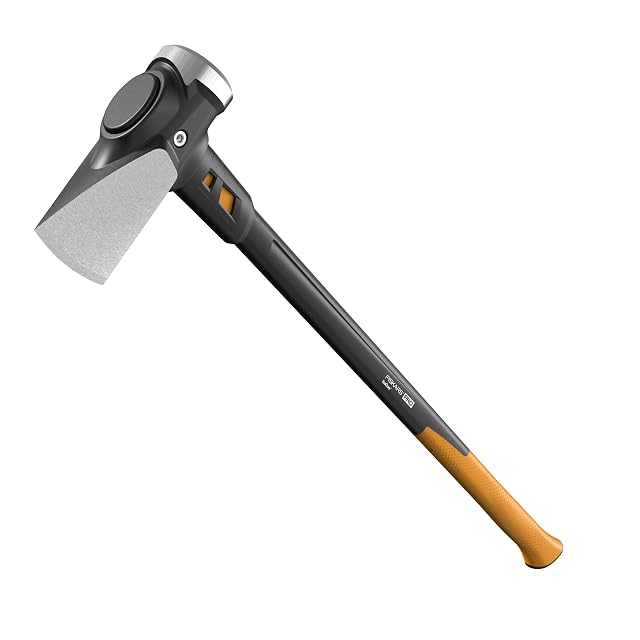
A splitting axe for forestry, agriculture, woodland, garden and trade work, stated for effortless splitting of firewood for a stove, fireplace, barbecue or campfire. A heavy design with a hammer on the back for driving splitting wedges, and a polished edge. A rubberized grip stated for secure hold and low vibration, with a worked-in eye for space-saving hanging. DIN 5129, quality class B. Overall length 880 mm (34.6 in), handle length 820 mm (32.3 in), fiberglass handle. Head length 195 mm (7.68 in), head weight 3000 g (105.8 oz), head color black, head material steel.

A standard, cited

DIN 5129, quality class B.

On most axe listings the claims are adjectives — hardened, durable, high quality — and here there is a document and a class.

This page reports it as the maker wrote it. What the class covers is in the standard rather than on a product page, and naming it is what makes that lookup possible at all.

Three lengths, which together describe the tool

880 mm (34.6 in) overall. 820 mm (32.3 in) of handle. A 195 mm (7.68 in) head.

Most listings publish one length or none. Publishing the split means the geometry is legible: how much of the tool is swing and how much is wedge.

It also makes the tool comparable with others, which often publish an overall length without saying what is head and what is handle.

A poll rated for wedges

Stated for driving splitting wedges, not for stakes.

That is a meaningful difference. Driving a steel or alloy wedge into a stubborn round is repeated heavy impact on the back of the head, and a poll intended for it is built and specified for it.

Not every hammer poll is: some are stated for stakes instead.

The eye

A worked-in eye for hanging.

Small, and it is the difference between an edge on a hook and an edge on a concrete floor. On a tool that lives in a shed for eleven months of the year, that is where the edge is actually lost.

What the sheet leaves out

A total weight, which is what the arms carry.

A sheath or edge guard.

And a vibration figure: low vibration is asserted, without a number.

Availability

On September 22, 2026, the price sat around $105 at the American Amazon store.

Keepa reading of September 22, 2026; stock and prices change without warning.

Prices quoted in this text are dated readings and can differ from the live price at the top of the page.
The declared numbers, and where they stop

Strengths

  • Cites a hand-tool standard and a quality class: DIN 5129, class B
  • Head length, overall length and handle length all published separately
  • A hammer poll explicitly for driving splitting wedges, not just for stakes
  • A hanging eye, which is what keeps an edge off a shed floor

Compromises

  • No total weight, so it cannot be compared with the listings that publish one
  • No sheath or edge guard mentioned
  • Low-vibration is asserted without a figure

Specifications

Head weight3000 g (105.8 oz)
Total weightThe maker does not state it.
Overall length195 mm (7.68 in) · 880 mm (34.6 in) · 820 mm (32.3 in)
Head materialSteel, black · Hammer back for driving splitting wedges · Polished
Steel hardnessDIN 5129, quality class B
Head fixingIntegrated eye for space-saving storage
HandleFiberglass, rubberized grip · Stated as low-vibration
SheathThe maker does not state it.
Amazon referenceB001ILAGAO (one reference across 6 Amazon marketplaces)
EAN4026947038346

Questions this one prompts

What does citing DIN 5129 tell me?

That the maker is claiming conformity to a published specification for the tool, with a quality class alongside it. This page reports it as the maker wrote it rather than interpreting what the class covers.

Why publish handle length as well as overall length?

Because the difference is the head. 880 mm (34.6 in) overall and 820 mm (32.3 in) of handle with a 195 mm (7.68 in) head is a real description of the geometry, and it lets the tool be compared with one that only publishes an overall figure.

Can I hit it with a sledgehammer?

The poll here is stated as a hammer for driving splitting wedges, which is the tool striking something else. Striking an axe poll with another hammer is a different question and belongs to the manufacturer’s own instructions.

Our score

7.9/ 10

A listing that cites a hand-tool standard and a quality class — DIN 5129, class B — with head, overall and handle lengths given separately and a poll meant for driving splitting wedges. Low vibration is asserted without a figure, and no total weight is published.

The price on Amazon.com

This model is listed on Amazon.com, with no price read at the last reading. Listed is not the same as in stock: availability changes daily, and the buy box shows the live price.

Details checked on November 14, 2026.

Who buys this one, among wood heating appliances

Regular splitting with wedges, where a hammer poll rated for driving them is the point

Sources

Specifications: the manufacturer sheet for wood heating equipment and the matching Amazon product page. Prices, ratings and availability: read on Amazon.com from a New York address. Every figure on this page names its source.

How we assess these wood heating appliances