Skip to content

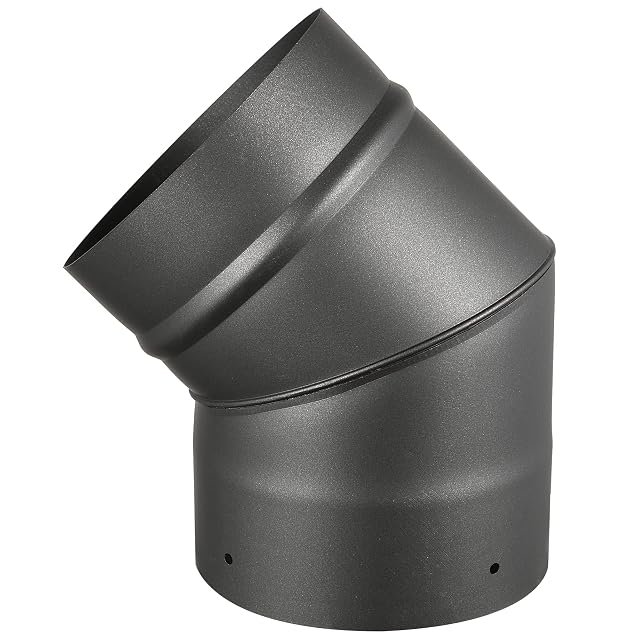
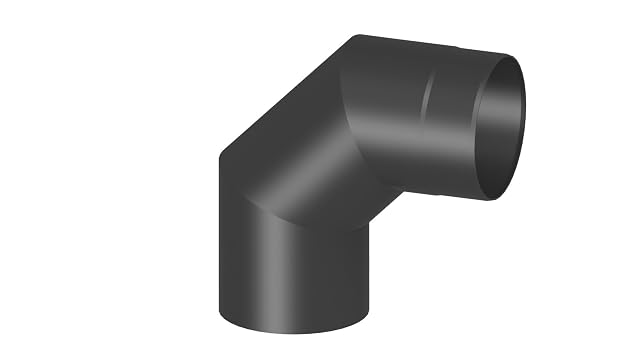
Tecnovis 90° Elbow Without Door, Ø 150 mm (5.91 in)

A rigid 2 mm (0.08 in) DC01 elbow stated without a door, offered in black or cast grey with the color references printed.

A black 90 degree rigid stove pipe elbow of 150 millimeters in two millimeter steel

Tecnovis 90° Elbow Without Door, Ø 150 mm (5.91 in)

A rigid 2 mm (0.08 in) DC01 elbow stated without a door, offered in black or cast grey with the color references printed.

Angle
Rigid 90°, stated without a door
Diameter
Ø 150 mm (5.91 in)
Wall thickness
The maker does not state it.
Material
Steel sheet DC01 (St12), 2 mm (0.08 in) · Black 702.284 or cast grey 702.288, with references printed
Coating
Heat-resistant Senotherm lacquer
Joint
Push-fit through drawn ends
Cleaning opening
The maker does not state it.
Fuels
For connection to stoves and use in the living and visible area
Standard
Not published
Amazon reference
B0F3W4VJTS (one reference across 6 Amazon marketplaces)
EAN
4057054123779
  • States explicitly that it has no door, so the buyer is not left guessing
  • Names the steel grade as well as the thickness
  • No cleaning door, so the pipe comes apart to clear the bend

Best for: A visible run being assembled in one color, where the reference numbers matter as much as the part

Check price on Amazon

Specifications

Angle
Rigid 90°, stated without a door
Diameter
Ø 150 mm (5.91 in)
Wall thickness
The maker does not state it.
Material
Steel sheet DC01 (St12), 2 mm (0.08 in) · Black 702.284 or cast grey 702.288, with references printed
Coating
Heat-resistant Senotherm lacquer
Joint
Push-fit through drawn ends
Cleaning opening
The maker does not state it.
Fuels
For connection to stoves and use in the living and visible area
Standard
Not published
Amazon reference
B0F3W4VJTS (one reference across 6 Amazon marketplaces)
EAN
4057054123779

What the maker’s page says

A stove pipe angle element / 90 degree elbow, rigid, without a door, made of steel sheet DC01 (St12) with a material thickness of 2 mm (0.08 in). It is stated for connection to stoves and use in the living and visible area. The surface is stated to carry a heat-resistant Senotherm lacquer coating. Assembly is stated to be simple, by push-fit through drawn ends. It is stated to be available in the colors black 702.284 or cast grey 702.288, from a German brand manufacturer.

Without a door, said out loud

An elbow either has a cleaning opening or it does not, and the buyer has to pick.

This listing states which. A listing that says nothing leaves a buyer to work it out from a photograph.

Why it matters: the bend is where deposit starts. Every change of direction slows the flue gas and lowers its temperature, and a cooling gas drops the tar and soot it was carrying. A flue swept straight through still has a bend nobody reached.

Without a door, clearing that bend means taking the pipe off the stove.

Two reference numbers

702.284 and 702.288.

A color given a reference rather than a name solves a real problem.

Stove pipe comes in black and in cast grey, and both vary between manufacturers — a cast grey elbow beside a cast grey pipe from a different maker is two greys, at eye level, in a living room.

A reference number lets the whole run be ordered in one finish: pipes, elbow, rosette, wall sleeve. It is the sort of thing that only appears on a listing from a maker with a catalog behind it.

DC01, again

Cold-rolled mild steel, named.

It is the ordinary material for single-wall flue pipe and naming it claims nothing — which is why it is worth noticing. Few listings name this grade; most say steel.

For the living area

Stated, and it is the distinction that matters.

Fire-aluminized sheet is the cheaper alternative, only conditionally suitable for the visible area because it may discolour at high temperatures.

This one is 2 mm (0.08 in) steel with a baked lacquer, specified for a room somebody sits in. That is what the extra money buys, and it is worth stating because both parts do the same job in the same flue.

What the sheet leaves out

A temperature, a class, a standard.

Some elbows publish a class under a named standard. This one publishes a material, a thickness, a coating and two color references — which is a different kind of completeness.

Availability

On November 13, 2026, the reference appeared in the American Amazon catalog, with no seller behind it.
Questions this guide leaves you with

Why state "without door"?

Because the alternative exists and the buyer has to choose. The bend is exactly where soot accumulates — every change of direction slows and cools the gas, and a cooling gas drops what it is carrying. Without a door, clearing that bend means taking the pipe apart.

What do the color references buy?

An exact match. Stove pipe is sold in black and cast grey and the two shades vary between makers; a printed reference number lets a whole run — pipes, elbow, rosette, wall sleeve — be ordered in the same finish.

Is DC01 worth naming?

It is ordinary cold-rolled mild steel — the standard material for this job — and naming it is a small piece of candour rather than a claim of superiority. Most stove-pipe listings just say steel.

The price on Amazon.com

This model is listed on Amazon.com, with no price read at the last reading. Listed is not the same as in stock: availability changes daily, and the buy box shows the live price.

Details checked on November 14, 2026.

Who buys this one, among flue elbows

A visible run being assembled in one color, where the reference numbers matter as much as the part

Sources

Specifications: the manufacturer sheet for wood heating equipment and the matching Amazon product page. Prices, ratings and availability: read on Amazon.com from a New York address. Every figure on this page names its source.

How we assess these flue elbows

All flue elbows

The price beside each product is fetched as this page opens, and it is the only figure here that is current. Any amount written into the prose was read once, on the day that sentence was written, and nothing has refreshed it since.