Skip to content

Water-carrying pellet stoves, and the figure they are specified on

A water-carrying pellet stove does two jobs at once, and the total output tells you almost nothing about either. What a heating system is sized against is the water-side figure: the part of the output that leaves through the flow and return rather than through the case. On this shelf the same appliance can publish 18 kW total and 12.5 kW to the water, or 19.2 and 15.5 — the difference between them is what heats the room the stove is in, and it is not small. Two other figures decide how the appliance lives with you rather than how it performs: the hopper capacity against the stated run time, which together give the filling interval, and the noise level, which almost nobody publishes. The three below are ordered by how much of that set each one prints.

Two outputs, and only one of them reaches the radiators

Every appliance on this page publishes a total output. The figure that sizes a heating system is the other one — the part that leaves through the flow and return.

The gap between them is what heats the room the appliance stands in. On a stove of nineteen kilowatts with fifteen and a half to the water, that leaves nearly four kilowatts in one room, which is a great deal if that room is a hallway.

The hopper is the daily figure

Output decides what the system receives; the hopper decides how often you are in the room with a sack. Read it against the stated run time rather than on its own: forty kilograms against eleven to eighteen hours is an interval, forty kilograms alone is a volume.

Where a listing publishes a hopper and no run time — most of this shelf — the interval cannot be worked out from the page, and the product page says so.

What almost nobody publishes

A noise level. One appliance in this family gives a figure; the rest either call themselves quiet or say nothing.

That matters more on a pellet appliance than on a wood stove, because an auger and a room fan run whenever the appliance does. A stove that lives in a kitchen is one thing; a stove that lives where people are reading is another.

The shortlist, and what puts it in this order

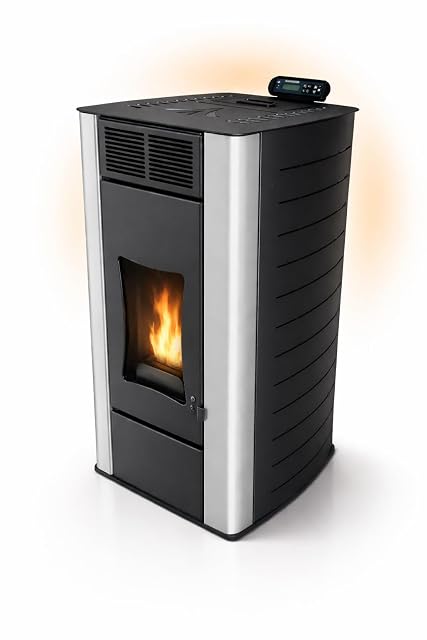
  1. UMBRELLA P18 Hydro, 18 kW

    18/10 kW total, 12.5 kW water, 90.8 %, 40 kg tank

    A water-carrying appliance that publishes both halves of its output, its efficiency, its hopper and its run time — and a subsidy claim with its own disclaimer.

    Best for: A heating circuit that needs a stated water-side output and a hopper big enough to be left alone
Questions this guide leaves you with

Why is the water-side output the figure to compare?

Because it is what the radiators receive. The rest of the output heats the room the appliance stands in, which may be welcome or may be too much. A system designed around a total output rather than a water-side output is designed around a number that never reaches it.

How often will I have to fill it?

Divide the hopper by the consumption, and prefer a listing that publishes both. One appliance here states 40 kg against a run of eleven to eighteen hours automatic, which is the only pair on this shelf from which an interval can be worked out. Where a maker publishes a hopper and no run time, the page says so.

Do these need electricity?

Yes — an auger, a fan and an igniter all draw power, which is why a pellet appliance stops when the supply does. One listing in this family publishes its electrical consumption; the rest do not, and the pages record the absence rather than estimating it.

Why each one, and for whom

UMBRELLA P18 Wasserführender Hydro-Pelletofen 18 kW

For : A heating circuit that needs a stated water-side output and a hopper big enough to be left alone

Main strength : Publishes the water-side output as well as the total, which is what a water-carrying appliance is specified on

Main limitation : The total output is printed as two numbers with no explanation of which is which

Read the full review →

Useful comparisons

Head-to-heads already published between two models from this guide or this aisle.

How this guide is built

The models here come from the catalogue of this site. Specifications are those published by the manufacturer and on the Amazon product page; prices are what Keepa reported on the date below, and both move. The ranking uses declared specifications, the balance of stated strengths and limitations, and price. No product on this site has been physically tested, and nothing here claims otherwise.

Last checked on

The tool we use ourselves

Model settled? Then check whether the figure beside it means anything.

Wood heating is bought when the house is already cold, and that is the worst moment to judge a figure: demand for this shelf climbs through the winter and falls away in spring, so a struck-through price in November tells you nothing at all about what the same reference cost in June. UniverTrack keeps a weekly history for each retailer, so a discount is weighed against a figure somebody actually paid rather than one composed for the banner — and it says when ordering is genuinely the moment.

Real price historyBuy-now alertsAI buying assistant
Try free for 14 days →
No commitment · Cancel in one click · 5 languages